
Local SEO Case Study — 126 Phone Calls From a Pest Control Listing That Was Doing Nothing
This is not a headline-grabbing traffic number, and that is the point. Pest control is a small-volume, high-intent trade: almost nobody searches for it casually, and almost everybody who does needs someone today. 126 calls is 126 jobs in the diary.
Pest Control Company
Client
Reporting Period
Timeline
Pest Control
Industry
Meet the Business
An owner-operated pest control company covering domestic and light commercial work — rodents, wasps and bees, bed bugs, cockroaches, fleas, plus a small book of ongoing commercial contracts for food premises.
Two technicians, a van each, and a business that lived almost entirely on repeat commercial contracts and the occasional referral. New domestic work was unpredictable. Some weeks the phone rang; some weeks it did not, with no explanation for either.
Why the Numbers Look Small — And Why That Is Fine
A traffic report that boasts ten thousand visitors would be meaningless here. What matters is whether a household with wasps in the loft, searching once, finds this company. On that measure the reporting period produced 126 calls and 76 website clicks — and in a two-van business, that is the difference between a quiet month and a full diary.
Be wary of any agency that reports a trade business on sessions and impressions. Those numbers are easy to inflate and tell you nothing. Calls, direction requests and booked jobs are harder to move and are the only figures that pay for the work.
The Challenge
- The listing existed but had never been worked on. Claimed years earlier, one category, no services, no photos beyond a van shot, no posts, no replies to the reviews that did exist.
- No pest had its own page. A search for “bed bug treatment” or “wasp nest removal” found a homepage that mentioned both in a list — and nothing that matched the specific fear behind either search.
- Emergency availability was not stated anywhere. The company did same-day callouts routinely. Google, and every prospective customer, had no way of knowing.
- Certifications were unmentioned. Professional membership, insurance and chemical handling qualifications all existed, and none of them appeared on the site or listing.
- The site was poor on mobile — and almost every pest search is somebody standing in a room they do not want to be in, holding a phone.
- Seasonality was being wasted. Wasps peak in late summer, rodents move indoors in autumn. Nothing on the site or listing anticipated either.
What We Actually Did
1. Made the Listing Work for Its Living
- Categories expanded from a single Pest Control Service entry to include Animal Control Service, Bird Control Service and Fumigation Service — each one matching a different set of searches the company could genuinely service.
- Every treatment entered as a named service, pest by pest, each with a written description. This is the step most trade listings skip entirely, and it is one of the cheapest wins available.
- Same-day and emergency availability stated explicitly in the description, the services and the hours.
- Real photography, carefully chosen. Technicians in uniform, equipment, unmarked vans, treatment in progress — imagery that reassures rather than repels. Pest control is a trade where the wrong photo actively loses the job.
- Seasonal Google Posts timed to the actual calendar: wasp nests in July, rodent-proofing in October, bed bug advice after the summer travel season.
- Reviews requested at the end of every job, with every review answered — discreetly, because customers are often embarrassed and naming the pest in a public reply is a good way to never get another review.
2. A Page Per Pest
Somebody who has found a rat and somebody who suspects bed bugs are in completely different emotional states, asking completely different questions. We built a page for each one.
- How to identify it — the signs, the droppings, the damage, the bites. Most searches start with uncertainty rather than confirmation.
- What the treatment involves, how many visits it takes, and what the household needs to do before and after.
- What it typically costs. Published openly, because the alternative is a bounce to whoever did publish it.
- How quickly a technician can attend, stated plainly at the top of the page.
- Safety around children and pets, which is the first question on the phone in almost every domestic job.
- Service schema with a named area served on each page, never LocalBusiness markup — a treatment page is not a branch.
3. Built for the Phone in a Panic
Page weight was cut hard, the number was made tappable and pinned to the top of every page on mobile, and the call-to-action was rewritten from “Contact us for a quote” to a direct statement of same-day availability. Certifications and insurance were given a visible place on every page — in a trade where a stranger enters the house and handles chemicals, credentials convert.
The Results
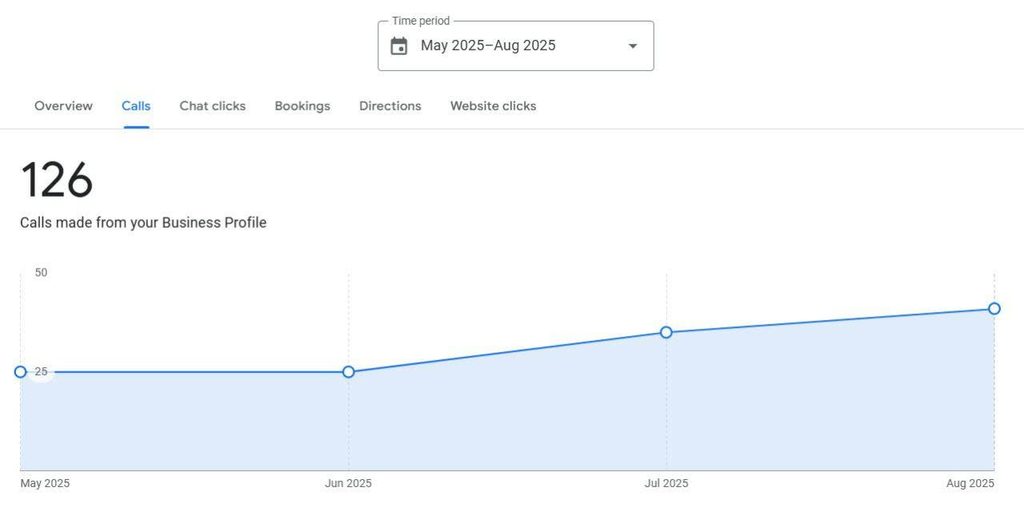
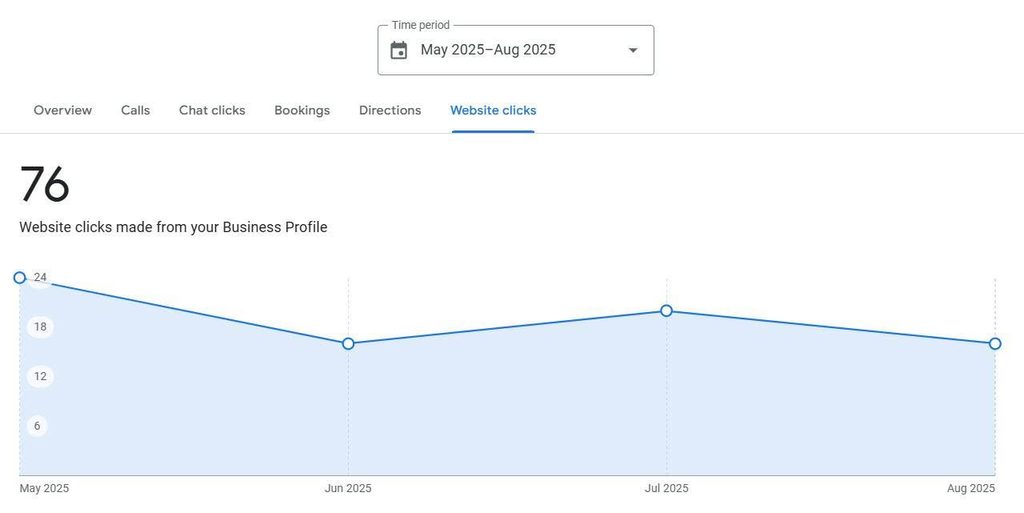
126 calls against 76 website clicks tells you something useful: in this trade, most people do not want to read. They want to ring. That ratio is why the phone number was moved above everything else on mobile — and why an agency optimising this business purely for website traffic would have been measuring the smaller half.
Before and After
| Measure | At the start | After the work |
| Calls from the Google listing | Not tracked, described as “quiet” | 126 in the period |
| Website clicks from the listing | Not tracked | 76 in the period |
| Google Business Profile categories | 1 | 4 |
| Treatments listed as services | 0 | Every pest treated |
| Website pages per pest | 0 — one homepage list | A full page per pest |
| Same-day availability stated | Nowhere | Listing, hours and every page |
| Certifications shown | Not published | Visible on every page |
Services Provided
- Local SEO
- Google Business Profile rebuild and seasonal posting
- Per-treatment page content
- Mobile conversion and speed work
- Review collection and discreet reply policy
- Call tracking and reporting
What the Owner Said
Key Takeaways
Small search volume is not a reason to skip local SEO — it is the reason to do it
When only a few hundred people a month search for what you do, every single one matters and the competition for them is thin. A neglected listing in a low-volume trade is the cheapest opportunity in local search, because almost nobody in the category has bothered.
One page per pest, not one page per company
Every pest is a separate search with a separate fear behind it. A page that answers “how do I know if these are bed bug bites” wins a job that a generic services list never will.
Sell the response time, not the company
Nobody choosing a pest controller cares how long you have been trading. They care whether you can come today. Put that first and everything else can follow.
Handle reviews with discretion
Customers are often embarrassed about the problem. A reply that names the infestation in public will cost you the next ten reviews. Thank them, confirm nothing.
Is your listing producing calls, or just sitting there?
Most trade listings have never been properly set up. We will tell you exactly what yours is missing and what it is likely costing you.
- A full audit of your Google Business Profile
- A visibility grid across your service area
- The specific fixes, in the order worth doing them
- No contract, no obligation
Ready to Achieve Similar Results?
Every business is unique, but success follows proven strategies. Let’s discuss how we can create a custom solution for your specific goals and challenges.