

There is no such thing as ranking in North Carolina. Google does not hold one list for the whole state. It builds a fresh list for every person who searches, based on where that person is standing.
So a plumber who shows up strongly on one side of a county can be completely invisible fifteen minutes down the road. That is not a fault in your website. That is how local search is built, and nobody tends to explain it before they quote you.
Key Takeaway
Local search in North Carolina is decided town by town, not statewide. The work is the same shape in Charlotte as it is in a small county seat, but the competition is not. Retainers start at $1,250 a month, and the honest first step is finding out where you already show up and where you vanish.
Why search in North Carolina is decided town by town
Google ranks you against the businesses closest to the person searching, so your visibility changes street by street across the state.
Picture someone in Charlotte typing “electrician near me”. Google draws a small circle around their phone and sorts the businesses inside it. Your shop in Concord might not make that circle at all.
Now the same search happens in Asheville, in Wilmington, in Greenville. Four different results. Four different sets of competitors. One of those towns might have twelve established firms fighting for the same three slots. Another might have three.
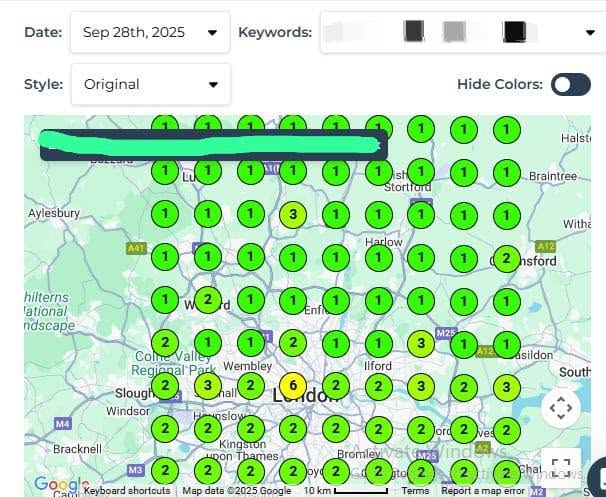
Rank grid a map of your area split into squares, showing your position in each one, so you can see exactly where you appear and where you disappear.
That is why a single “North Carolina ranking” report is meaningless. The only honest measurement is a grid across the towns you actually serve.
| What decides it | The box at the top | The plain blue links |
| Biggest factor | How close you are to the searcher, plus how complete your Google profile is | What is actually written on your pages and who links to them |
| Reviews | Count heavily, and recent ones count more than old ones | Barely move the needle directly |
| How long a change takes | Days to a few weeks for profile edits to settle | Weeks to months before pages are re-read and re-ranked |
| The next town over | You fade fast once the searcher leaves your immediate area | A well written page can rank across the whole state |
What this means for you
The three businesses in the box at the top of Google are chosen mostly on distance. The plain blue links underneath are not. If you want work in towns you are not physically in, those blue links are the route, and they take longer.
What we actually do
We measure where you rank across your service area, fix your Google profile, then build pages for the towns you want work in.
The order matters. Most agencies start writing before they know where you are weak, which is how you end up paying for pages in towns you were already winning.
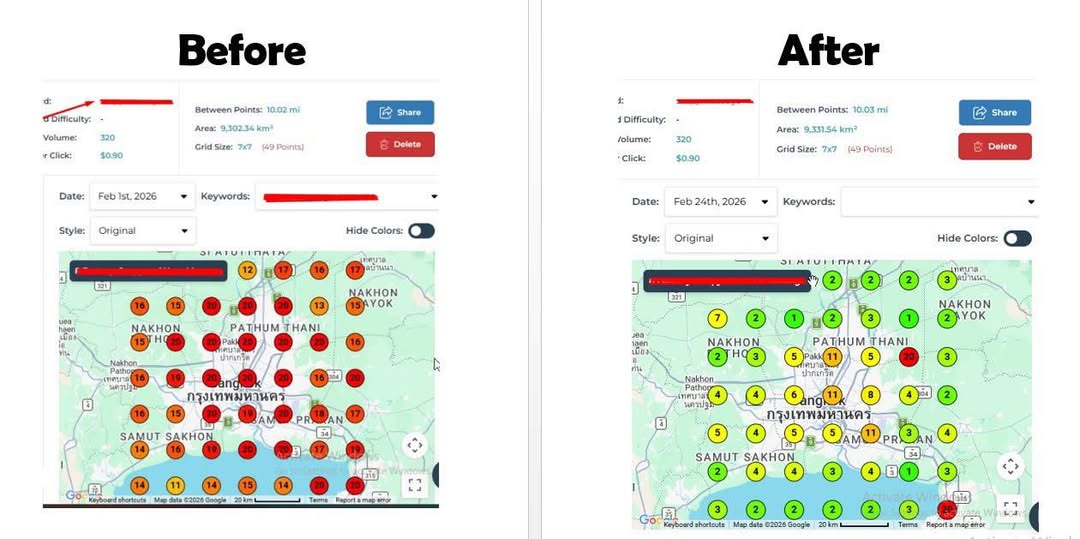
- Run a rank gridWe map your position square by square across the area you serve, so we both see the real picture before anyone spends money.
- Audit the Google profileCategories, services, hours, photos, description. Wrong category alone can hold a listing out of the box at the top for years.
- Clean up your listings elsewhereYour name, address and phone number need to match everywhere they appear online. Mismatches make Google hesitate.
- Build the town pagesOne real page per town you want work in, written about that town, not the same page with a name swapped.
- Fix the site underneathSpeed, structure, the way your services are laid out, and whether a phone can load it on a bad signal.
- Set up a review habitA simple routine your team can keep up, asking every customer, never offering anything in return.
- Re-run the grid monthlySame squares, same search terms. You see movement or you see none, and we tell you which.
Every city page we have published for North Carolina is listed below, so find the one closest to you.
What changes when you want more than one town
Covering several towns means earning a separate page for each one, because Google will not stretch a single page across a region.
This is where most of the bad advice lives. People stuff twenty town names into a footer and wonder why nothing happens. Google has seen that trick for over a decade.
A page that earns a ranking in a town reads like it was written by someone who works there. That is slower to produce and it is the only thing that holds.
- Write a genuine page per town, with real jobs, real travel notes and real pricing context
- Prioritise the towns where you already get some work, then expand outward
- Keep your Google profile pinned to the one address you actually operate from
- Accept that the box at the top mostly belongs to the town you sit in
- Do not list town names in the footer and call it coverage
- Do not copy one page and swap the place name on each version
- Do not create extra Google listings at addresses you do not staff
- Do not expect the map pack to carry you into towns an hour away
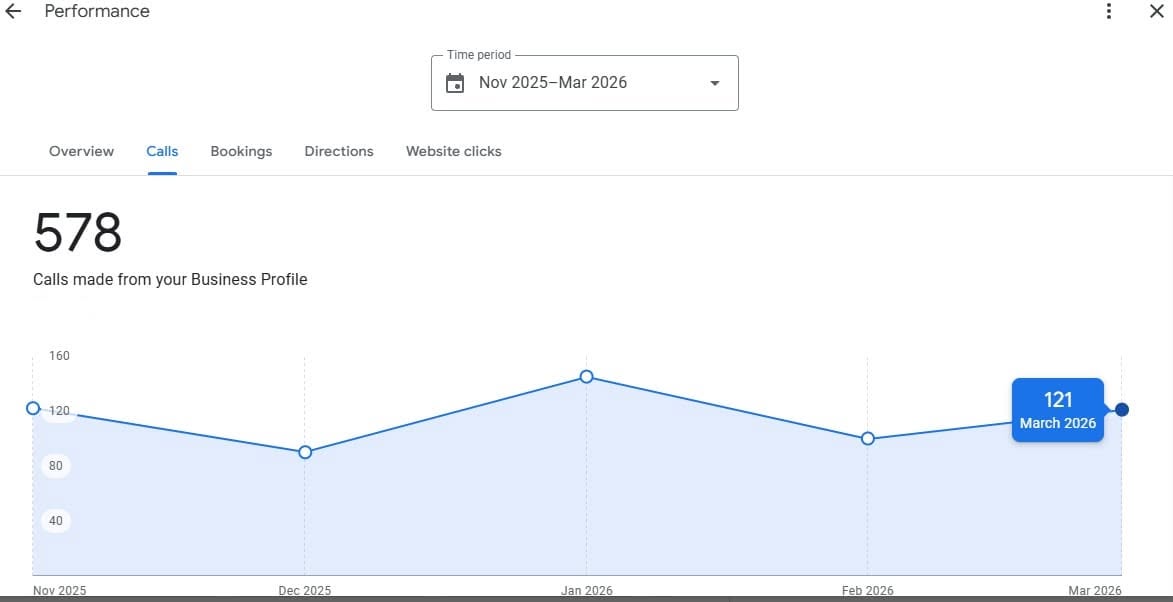
An HVAC company went from one listing to visible coverage across thirty towns, reaching 564 search clicks.
What it costs
Retainers start at $1,250 a month, and that is the figure, not a starting point for a negotiation you will lose.
What sits inside it depends on how many towns you want. A single-town plumber and a contractor covering half a county are not the same amount of work, and we will say so on the call rather than after you sign.
We work with 26 trades, which means we have usually seen your situation before. That shortens the guessing, and guessing is the expensive part of SEO.
How long before it works
Expect small movement inside the first month, something you can feel around month three, and a fair judgement at month six.
That range is deliberately unflattering. Anyone promising you the box at the top in thirty days is either lucky or lying, and you cannot tell which until the money is gone.
| When | What changes |
| Month one | Grid run, profile rebuilt, listings corrected, first town pages drafted. You see a baseline and usually some early grid movement close to your address. |
| Month three | Town pages live and being re-read by Google. Review count climbing. Grid squares further from your address start turning. Calls begin shifting in mix, not just volume. |
| Month six | Enough data to judge honestly. You can see which towns are responding, which are not, and whether the money should move to a different part of your area. |
What this means for you
Judge the work on the grid, not on your gut. Phones go quiet in slow weeks for reasons that have nothing to do with Google. The grid does not have moods.
The one thing that will get your listing suspended
Offering anything at all in exchange for a review breaches Google’s policy and puts the listing your whole business depends on at risk.
Money, a discount, a free filter change, a prize draw, a bonus for whichever installer collects the most. All of it counts. It does not matter that the reviews are from real customers describing real work.
This will get your listing suspended
Never offer a reward of any kind for a review. If someone suggests a prize draw or a crew bonus, refuse it outright. A suspended listing takes you out of the box at the top of Google entirely, appeals can drag on, and every review you bought disappears with it.
Ask everyone, every time, with no incentive attached. It is slower and it is the only version that cannot be taken away from you.
If an agency offers to supply reviews, end the conversation. They are spending your listing, not theirs.
Can you get me ranking across all of North Carolina?
Not in the box at the top of Google, no, and anyone saying otherwise is selling you something. That box is tied to where the searcher is standing, so it belongs to the town you physically operate from and the towns immediately around it. The plain blue links underneath are different. A well built page can rank across the whole state, and that is the realistic route into towns you cannot cover with your map listing. It is slower work and it is honest work.
Does this work if I am in a small North Carolina town?
Usually it works faster than in a city. The work is the same shape everywhere, but the competition is not. In a smaller town there may only be a handful of businesses in your trade with a properly built Google profile, so fixing yours can move you quickly. In Charlotte or Raleigh you are fighting people who have been at this for years. Smaller towns mean fewer searches, so the goal is a steady stream of the right calls rather than a flood.
Do I show up when someone asks ChatGPT or Google’s AI for a business like mine?
Sometimes, and it depends on the same groundwork. AI answers are assembled from the information the map pack already reads: your Google profile, the categories you sit in, the services you list, and what your reviews say. A business with a thin or wrong profile gives those systems nothing to quote. We do not claim to work on any named AI product and nobody can promise you a place in an AI answer. What we can say is that the work which wins the map pack is the same work that gets a business named.
Do I need a new website before any of this starts?
Often not. Plenty of ordinary sites rank fine once the pages and the Google profile are sorted out. We look at speed on a phone, whether the structure makes sense, and whether anything is actively blocking Google. If your site is broken or so slow it loses people before it loads, we will tell you straight and explain what it would cost. If it is merely plain, we leave it alone and spend the money where it actually moves the grid.
Find out where you actually rank in your part of North Carolina
A short call where we run through your area, your trade and what the grid is likely to show before you commit to anything.
- Where you show up now and where you disappear
- Which towns are realistic for you and which are not
- What $1,250 a month would cover in your situation
- No contract pushed on the call
- No promised ranking or lead number
Book a free strategy sessionEvery result on this page is published in full. Read the case studies.